

What is a WWTPi and why is it key to the industry?
Industrial water treatment plants (WWTPs) are facilities designed to treat wastewater generated in production processes prior to discharge or reuse. Their correct configuration and operation are essential to comply with environmental regulations, reduce operating costs and move towards a more sustainable industry.
In this article, we explore the main stages that make up a WWTPi, with special attention to the physicochemical and biological processes that allow for efficient and environmentally friendly treatment.
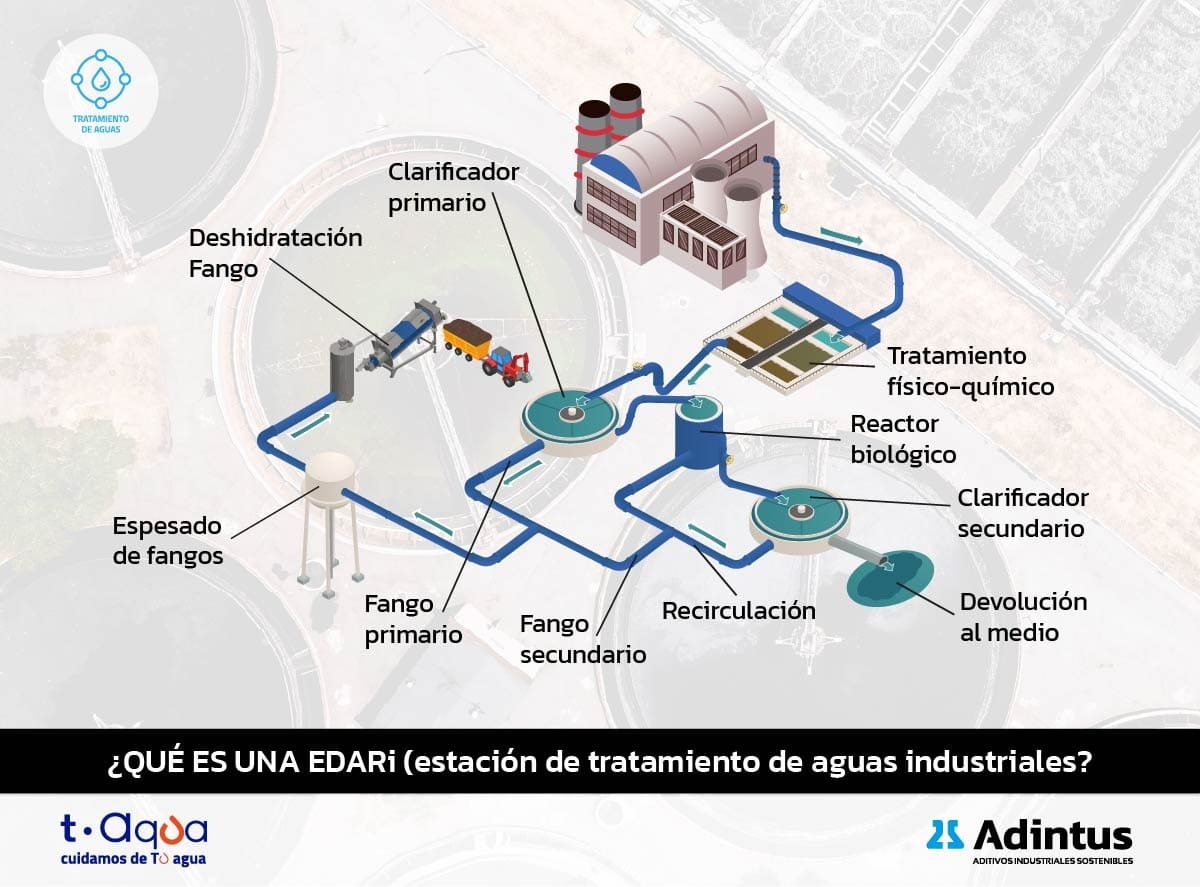
Main stages of an industrial water treatment plant
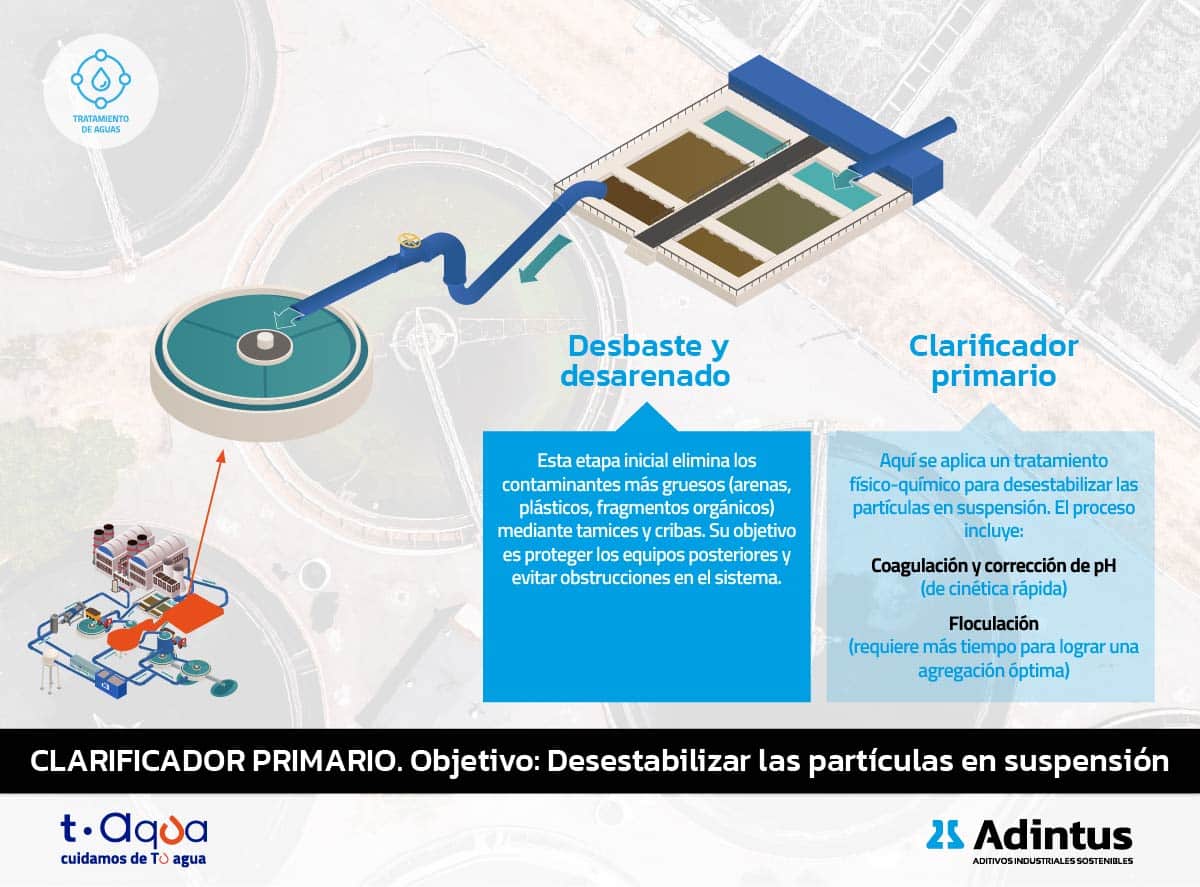
Roughing and desanding
This initial stage removes the coarser contaminants
(sands, plastics, organic fragments) through sieves and screens. Its
objective is to protect downstream equipment and avoid blockages in the
system.
Primary clarifier
Here a physical-chemical treatment is applied to destabilize the suspended particles. The process includes:
- Coagulation and pH correction (fast kinetic)
- Flocculation (requires more time to achieve optimum aggregation)
Depending on the nature of the water and the flocs obtained, technologies such as decanters, DAF (Disolved Air Flotation) or CAF (Cavitation Air Flotation) are used.
Biological reactors
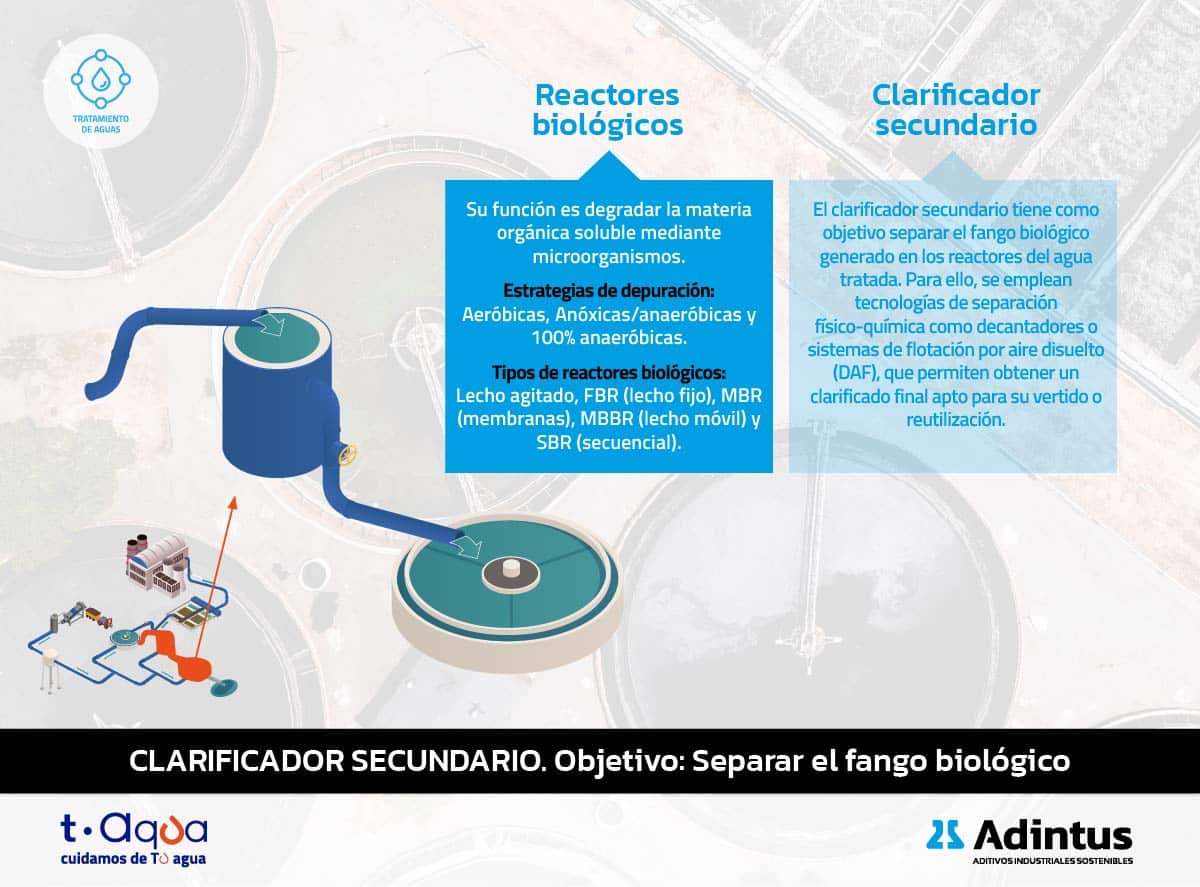
They are the core of the treatment. Their function is to degrade soluble organic matter by microorganisms. The configuration depends on the water matrix and the objectives of the process.
Purification strategies
- Aerobic: they work on the soluble COD through the aerobic metabolism of a series of heterotrophic bacteria. There are also nitrifying and filamentous bacteria, all of which play an important role in the process (despite the bad press that the latter have among treatment plant operators due to bulking and foaming problems, they play a very important role in providing structure to the sludge). The problem with these purely aerobic systems is that they are energy inefficient.
- Anoxic/anaerobic: they have a lower degradative performance than aerobic systems, although in combination with these they can greatly help the overall efficiency of the process. In these systems very interesting and vital processes are favored for compliance with discharge parameters of the facilities; one of the most significant processes is denitrification (elimination of nitrogen in the form of N₂).
- 100% anaerobic: less common, but useful in certain industrial contexts.
Types of biological reactors
- Agitated bed: microorganisms in suspension driven by accelerators.
- FBR (fixed bed): microorganisms fixed on a surface.
- MBR (membranes): high purity filtration using PVDF membranes.
- MBBR (moving bed): carriers in suspension with highly degradative biofilms.
- SBR (sequential): batch treatment with control of nitrification and denitrification phases.
Secondary clarifier
The purpose of the secondary clarifier is to separate the biological sludge generated in the reactors from the treated water. For this purpose, physical-chemical separation technologies such as decanters or dissolved air flotation(DAF) systems are used to obtain a final clarified product suitable for discharge or reuse.
The need to apply chemicals at this stage depends directly on the performance of the biological pretreatment. If the primary clarifier and reactors have worked properly, the water should have a low suspended solids (TSS) concentration and a stable flocculate structure. In that case, the secondary clarifier is limited to separating the sludge to be sent to the sludge line.
However, if the biological system is not balanced or if there are free bacteria in the interflocular space, the clarified water may not meet the discharge parameters. In these cases, it is necessary to reintroduce coagulants and flocculants to improve separation and ensure effluent quality.
Common problems: mud bulking
One of the most frequent problems at this stage is the bulking of the sludge, caused by the uncontrolled growth of filamentous bacteria. These bacteria generate an overstructure of interflocular bridges that trap air, preventing the sludge from settling properly. The result is a cottony sludge with sedimentability values (V30) close to 1000, which compromises the efficiency of the process.
To avoid bulking, it is essential to maintain a stable primary treatment, free of agents toxic to microbiology, and to ensure equilibrium in the biological reactor.
Sludge line
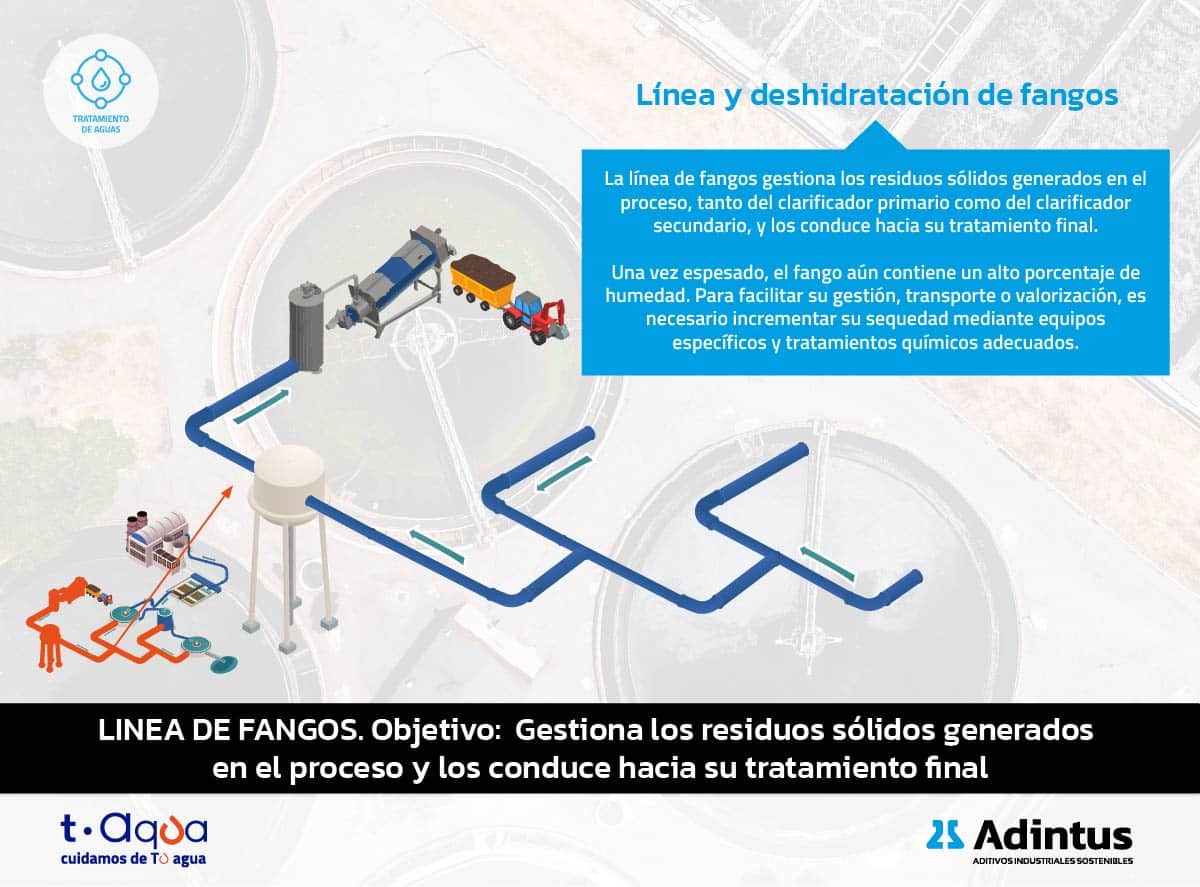
All of the previous stages of industrial water treatment focus on removing contaminants from the water. But what happens to those contaminants once they are separated? The answer lies in the sludge line, a critical part of any WWTP design.
This line manages the solid waste generated in the process, both from the primary clarifier and the secondary clarifier, and takes it to its final treatment. Let’s see its main components:
Primary mud
It comes from the initial physicochemical stage. This type of sludge usually has a high content of
Secondary mud
It originates in the secondary clarifier after biological treatment. Although part of this sludge is recirculated to the reactor, a percentage is purged to the sludge line. As it has been biologically degraded, its VFA load is lower than that of the primary sludge. In biogas plants, the two types of sludge are often mixed to optimize energy efficiency.
Sludge thickener
This is the next step in management. Here the water content of the primary and secondary sludge is reduced, concentrating the solids before dewatering. This process improves the efficiency of downstream equipment and reduces the volume to be treated.
Sludge dewatering
Once thickened, the sludge still contains a high percentage of moisture. To facilitate its management, transport or recovery, it is necessary to increase its dryness by means of specific equipment and appropriate chemical treatments.
Dehydration equipment
- Press: reaches 30-50% of dry solids. Ideal to obtain sludge with high dryness.
- Centrifuge: achieves 20-35% dryness. Processes large volumes quickly.
- Screw dehydrator: achieves 15-30% dryness. It is an economical, efficient and low maintenance solution.
Chemical treatment
In order for the sludge to maintain its structure during dewatering, highly charged cationic flocculants with a cross-linked structure are used. These products give rigidity to the sludge, preventing its rupture and improving the quality of the rejection.
How to improve the efficiency of your WWTPi with sustainable solutions
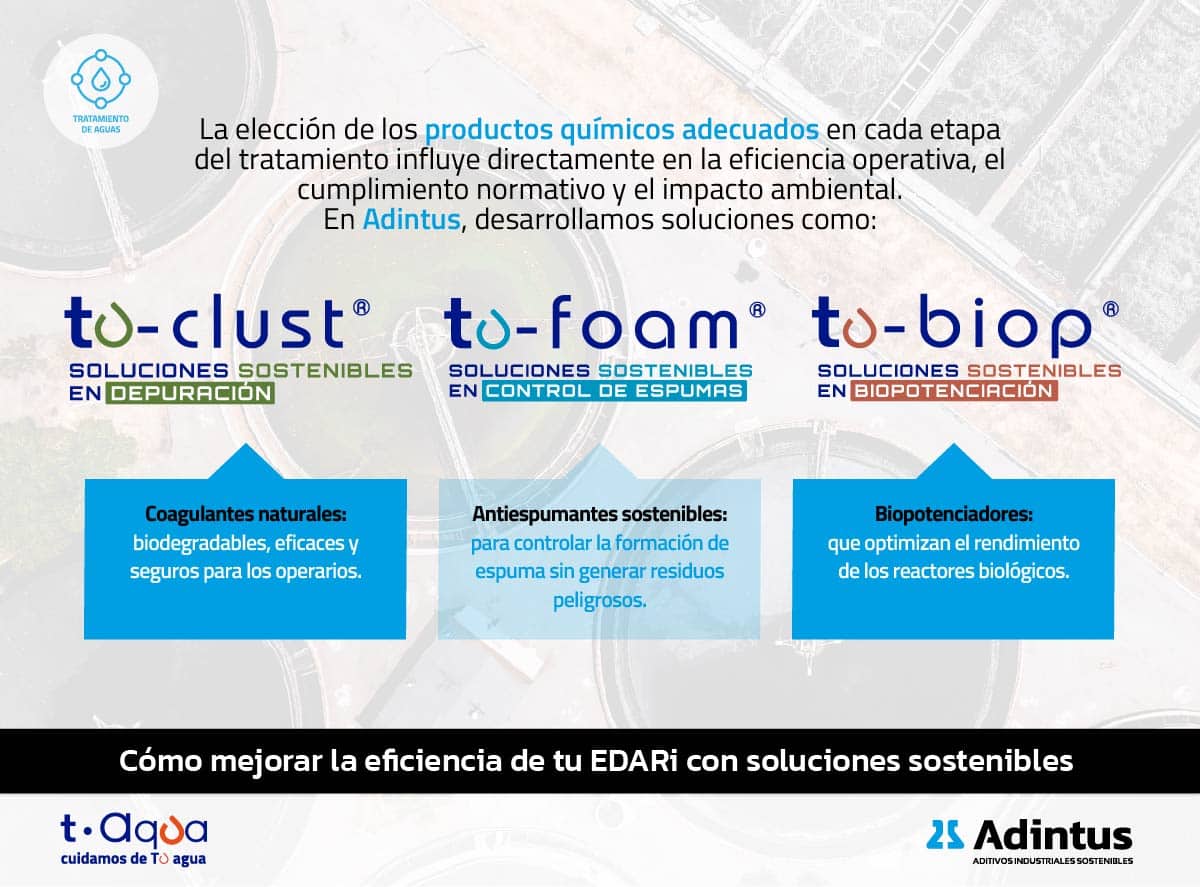
The choice of the right chemicals at each stage of treatment directly influences operational efficiency, regulatory compliance and environmental impact. At Adintus, we develop solutions such as:
- Natural coagulants: biodegradable, effective and safe for operators.
- Sustainable defoamers: to control foam formation without generating hazardous waste.
- Biopotentiators: which optimize the performance of biological reactors.
Conclusion
Understanding the structure of a WWTP allows more informed and sustainable decisions to be made in industrial water treatment.
At Adintus, we work so that each stage of the process can benefit from environmentally friendly solutions, without sacrificing technical efficiency.


